Queue Management System in Saudi Arabia: 2026 Guide
A modern queue management system in Saudi Arabia is no longer a nice-to-have for banks, clinics, and government service centers. It is the backbone of a calm, measurable, and fair customer journey. As Vision 2030 pushes service providers toward digital-first experiences, the organizations that still rely on paper tickets and shouted numbers are quietly losing customers every single day.
In this 2026 guide we explain what the technology actually does, which features matter, and how to pick a partner that fits your branch network. We draw on hands-on deployments across Riyadh, Jeddah, and Dammam so you can skip the expensive trial-and-error stage.
Why a Queue Management System in Saudi Arabia Matters in 2026
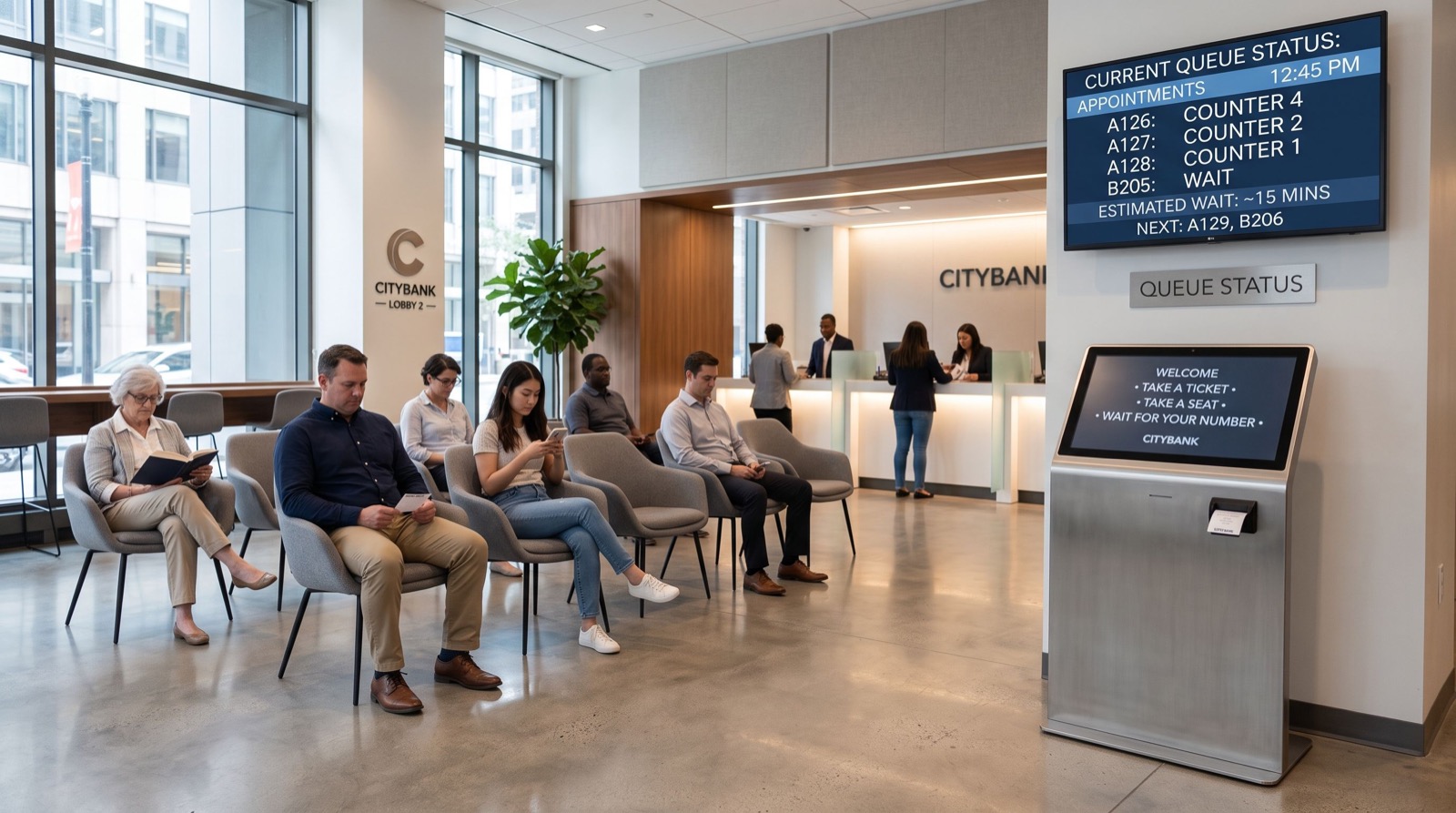
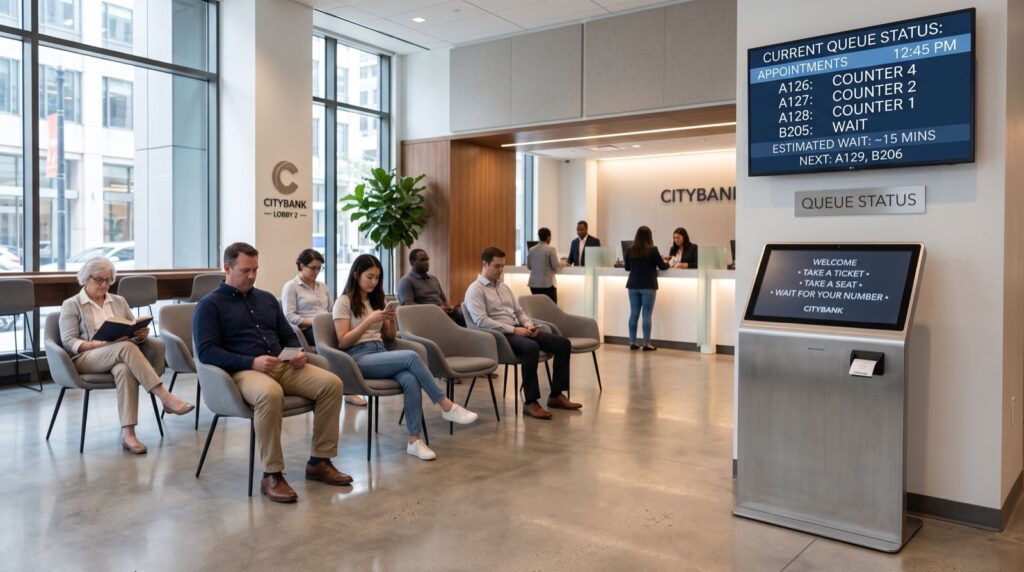
Saudi consumers now expect the same speed from a bank visit that they get from a food-delivery app. Long, disorganized lines break that expectation instantly. A well-designed queue management system in saudi arabia turns a chaotic waiting hall into a quiet, ticketed flow where every visitor knows exactly where they stand.
The payoff is practical. Staff stop refereeing arguments about “who was first” and start serving. Managers get live dashboards instead of guesswork. And because national programs under Vision 2030 reward measurable service quality, the data these systems capture feeds straight into compliance reporting.
According to the Kingdom’s official Vision 2030 program, improving the quality and efficiency of public services is a central pillar of national transformation — and queue data is one of the clearest ways to prove that progress.
What Should a Modern Queue System Include?
Not every “ticket machine” is a true platform. The features below separate a serious deployment from a glorified number dispenser. Use this as a shortlist when you compare vendors.
| Feature | What it does | Why it matters |
|---|---|---|
| Digital ticketing | Issues tokens via kiosk, app, or QR | Removes paper and physical lines |
| Arabic & English UI | Bilingual kiosks and signage | Serves residents and expats equally |
| Live dashboards | Real-time wait and service metrics | Lets supervisors rebalance counters fast |
| SMS / app alerts | Notifies visitors before their turn | Frees people to wait comfortably |
| Feedback capture | Rating prompt after service | Links wait time to satisfaction |
Insist on a system that exports raw data. If you cannot pull counter-level reports, you cannot coach your team — and coaching is where the real savings live.
How Do Drive-Thru and Virtual Queues Help?
The fastest-growing segment in 2026 is the queue you never physically join. Virtual and remote tokens let a visitor “take a number” from a phone and arrive minutes before service. Pair that with purpose-built Drive Thru Solutions and you extend the same orderly flow to vehicles collecting documents, prescriptions, or orders.
Drive-thru lanes bring their own discipline. Done well, they deliver measurable wins:
- Shorter dwell time per vehicle because orders are pre-logged.
- Clear audio and display confirmation at each window.
- Weather-proof service — customers never leave the car.
- Analytics that show lane throughput hour by hour.
For temperature-sensitive goods and cold-chain pickups, these lanes are often operated alongside dependable specialists who understand how to keep stock compliant from storage to handover.
How Do You Choose the Right Provider?
Procurement teams often fixate on hardware price. That is the wrong lens. The total cost of ownership is driven by support quality, software updates, and integration depth. Score each shortlisted vendor against a simple framework.
- Local presence: Can an engineer reach your branch within hours, not days?
- Integration: Does it connect to your CRM, core banking, or clinic system?
- Scalability: Will the same platform run one branch and fifty?
- Compliance: Are data-residency and privacy rules respected?
- Reporting: Are dashboards genuinely actionable, not just pretty?
Request a live pilot in one busy branch before you sign. A two-week trial reveals far more about reliability than any sales deck, and it gives your frontline staff a real vote in the decision.
Measuring the Return on Investment
A queue platform pays for itself when you track the right numbers. Start with average wait time, service time, and the no-show rate for virtual tokens. Within a month you will usually see wait times drop by double digits as supervisors learn to open counters before pressure builds, not after.
Then layer in satisfaction scores from the post-service prompt. When you can show leadership that shorter waits correlate with higher ratings and more completed transactions, the budget conversation for year two becomes easy.
Which Industries Benefit Most?
Almost any high-footfall service operation gains from structured queuing, but a few sectors see outsized returns in the Kingdom. Banks and finance houses use it to manage dense morning rushes and meet service-quality targets. Hospitals and clinics rely on it to separate triage, pharmacy, and billing lines so patients are not mixed into one anxious crowd.
Government service centers, telecom stores, and vehicle-licensing offices round out the list. These are the places where a single disorganized hour can generate dozens of complaints, and where a calm, ticketed flow pays for itself almost immediately.
Common Mistakes to Avoid
The most frequent failure is treating the kiosk as the whole project. A token printer with no analytics, no staff training, and no feedback loop quickly becomes an expensive paperweight. Treat the platform as a management tool, not a vending machine.
Two other pitfalls recur across rollouts:
- Skipping the pilot: deploying network-wide before testing one branch hides problems until they are costly.
- Ignoring the data: dashboards only help if a named manager reviews them weekly and acts.
Avoid these two traps and your deployment will not just survive its first quarter — it will keep improving as your team learns to read the numbers and open counters before pressure builds.
Frequently Asked Questions
How long does it take to install a queue management system in Saudi Arabia?
A single-branch rollout typically goes live within one to two weeks, including kiosk setup, signage, staff training, and a short tuning period. Multi-branch networks are staged branch by branch to avoid disruption.
Does it support Arabic and English?
Yes. A compliant system offers fully bilingual kiosks, tickets, and audio announcements so both Saudi nationals and expatriate residents are served without confusion.
Can it integrate with our existing systems?
Modern platforms expose APIs that connect to core banking, hospital information systems, CRMs, and appointment tools. Confirm the specific connectors you need during the pilot phase.
Is a drive-thru option worth it for a service center?
If you handle document collection, prescriptions, or order pickups, yes. Drive-thru lanes shorten dwell time and keep customers comfortable, which lifts throughput during peak hours.
Conclusion
In 2026, a reliable queue management system in Saudi Arabia is the quiet engine behind faster service, happier visitors, and cleaner compliance data. Start with one busy branch, measure relentlessly, and scale what works. If you are ready to replace the chaos of paper tickets with a calm, data-driven flow, talk to a specialist team and book a live pilot today.